Google’s shift to Agentic Commerce: What It means for Ecommerce SEO
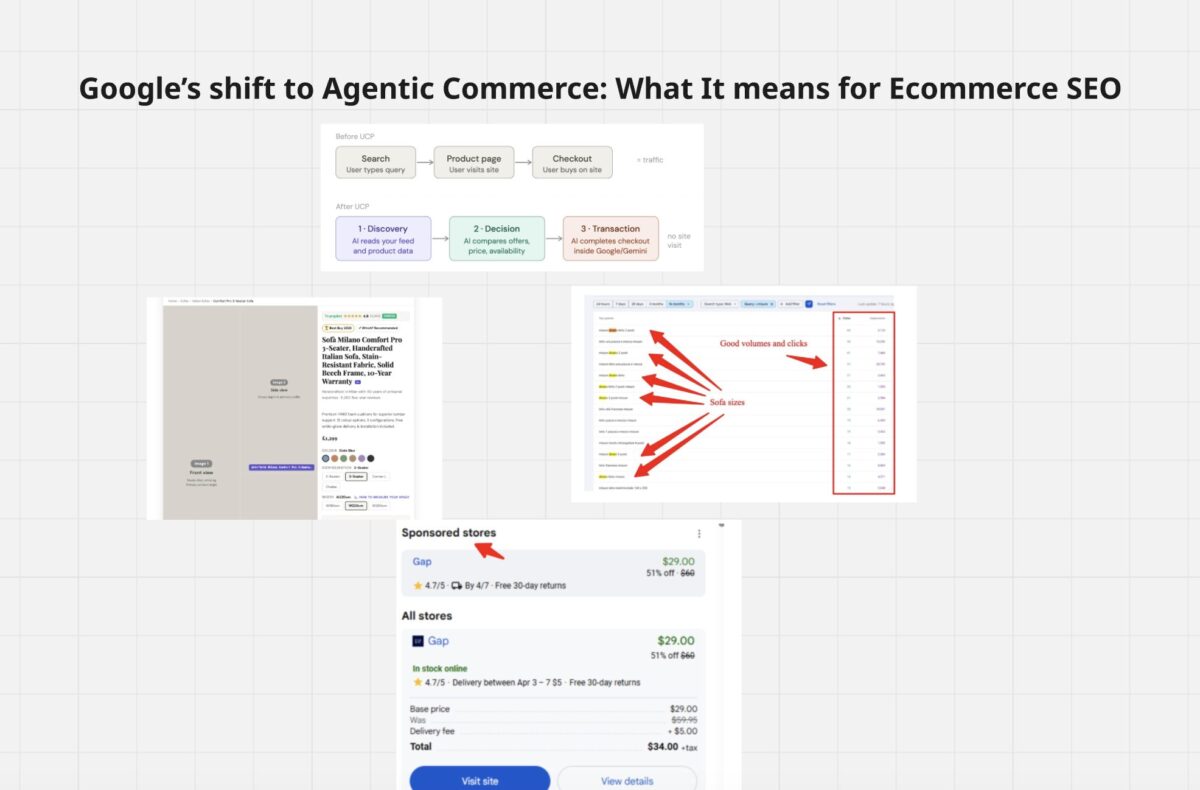
With UCP, Google’s AI handles the entire purchase journey from reading your product feed, to comparing offers, to completing checkout without the user ever visiting your site.
Organic traffic can drop while sales go up, and your analytics will show nothing.
If before you won because someone clicked your site, now you’ll often win because the AI picked your product.
Pricing errors, feed inconsistencies, inventory mismatches, or a missing promotion are all it takes for products to quietly fall out of the AI layer.
Sostantially, the Universal Commerce Protocol (UCP) is an open standard designed to enable “agentic commerce,” allowing AI assistants (like Google Gemini or ChatGPT) to research, negotiate, and instantly buy products on your behalf directly within a chat conversation.
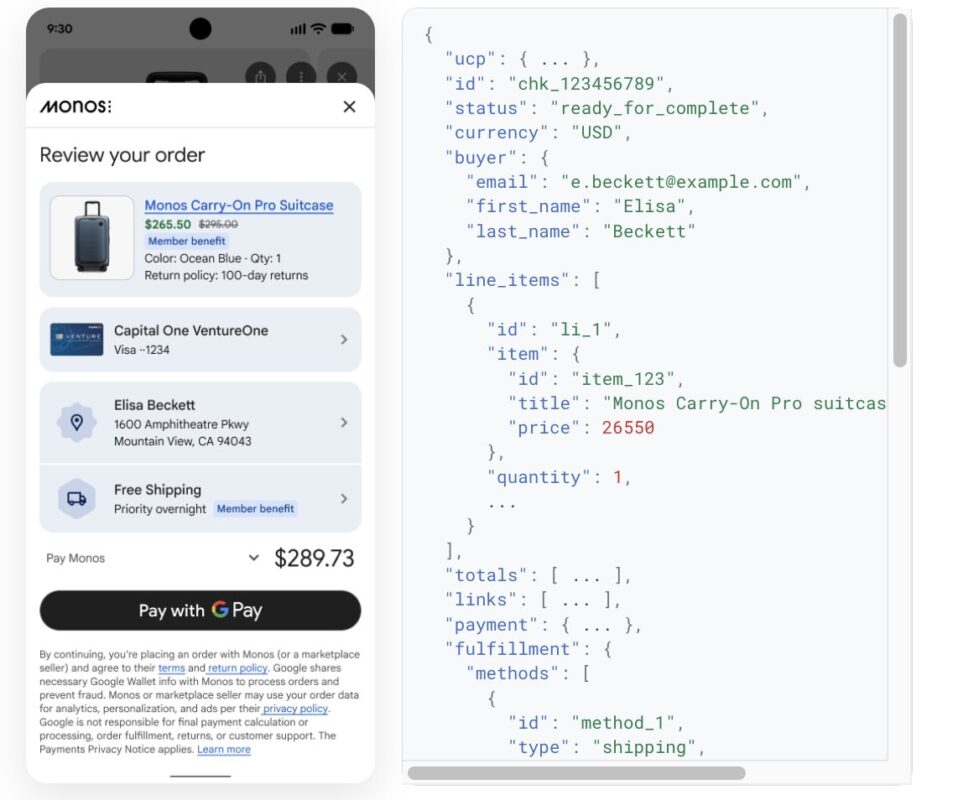
Google introducing the Universal Cart
It’s a new intelligent cart that brings superpowers to your shopping
So you can add things to your cart while you’re browsing Search, chatting with Gemini, watching YouTube, or even reading your Gmail.
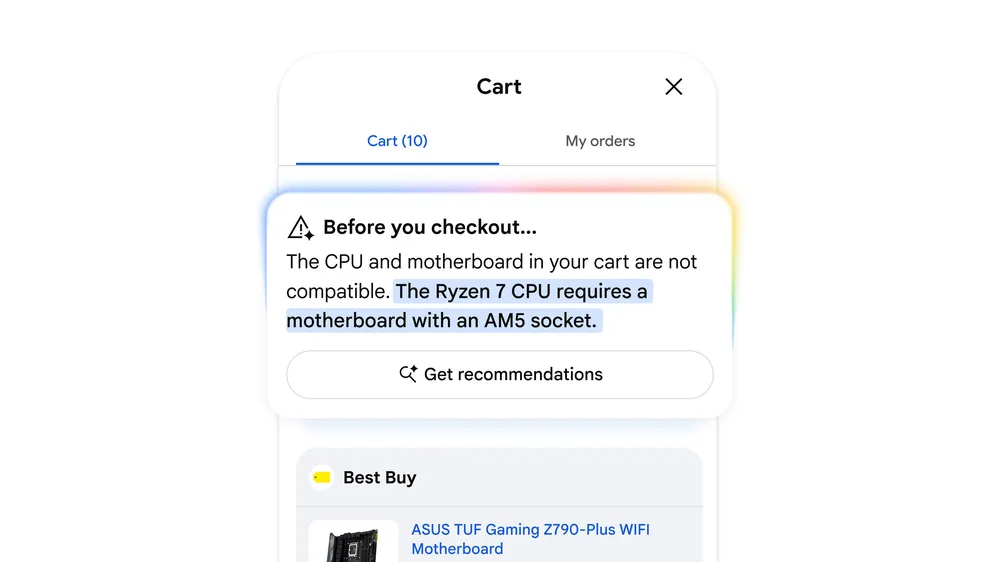
Your cart will proactively flag any product incompatibilities and suggest alternatives.
Since the cart was built on Google Wallet, it understands your payment method perks, loyalty information and merchant offers so it can help you choose.
This lets you quickly find opportunities for hidden savings or points without having to remember them yourself.
So the classic product page needs to have changes.
Because if a person don’t find a product but he needs about other product that you have, you need to discoverable it.
Will be important to show the compared products or other alternatives, we’ll see very well this aspect after.
Google shows an example here.
It knows your preferences well because it has this information, and before you checkout it advises you to pay attention.
Anyway, Google has created Agent Payments Protocol (AP2) to help agents make secure payments on your behalf, with boundaries and accountability to give you peace of mind.
AI agents compress product discovery through natural conversation.
The role of AI is to understand complex requests and perform multi-step tasks.
AI agents make payment flows more convenient and efficient for all types of tasks, from the routine to the complex.
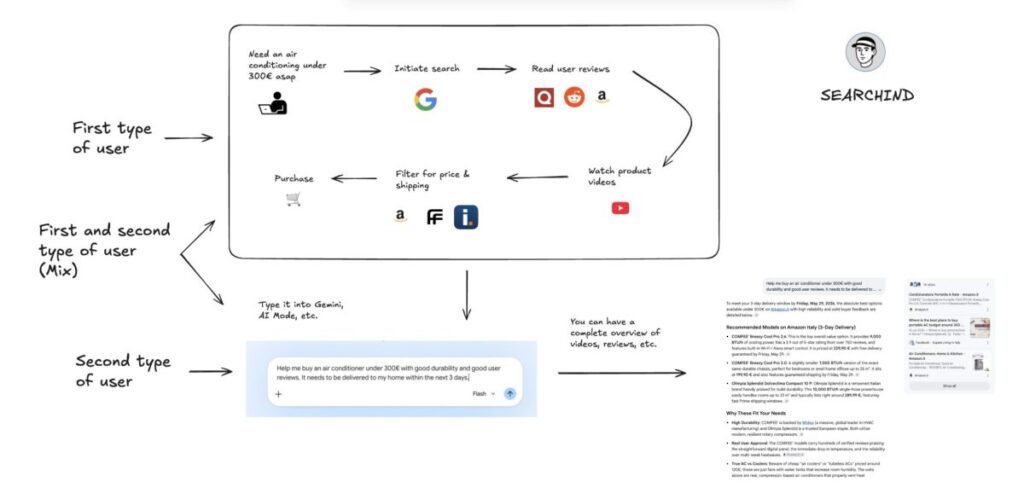
In the image example, you can see the first type of user, the second, and a possible mixed search.
Imagine you tell Google’s AI assistant “buy me a pair of turquoise running shoes.”
Instead of you clicking through a website, filling in your address, and entering your card number, the AI does all of it for you, step by step, always asking your permission before moving forward.
This is AP2 (Agent Payments Protocol), Google’s protocol that makes this possible
The three columns show who is doing what at each moment:
- you (approving decisions)
- the AI agent (searching, locking prices, handling paperwork)
- and the shop or bank (providing products and processing the payment).
How the AI agent buys for you
The whole thing is designed so that nothing can be changed without your signature, and every step leaves a permanent record that you and the merchant can both see.
Sponsored Product Grid Ads in AI Mode
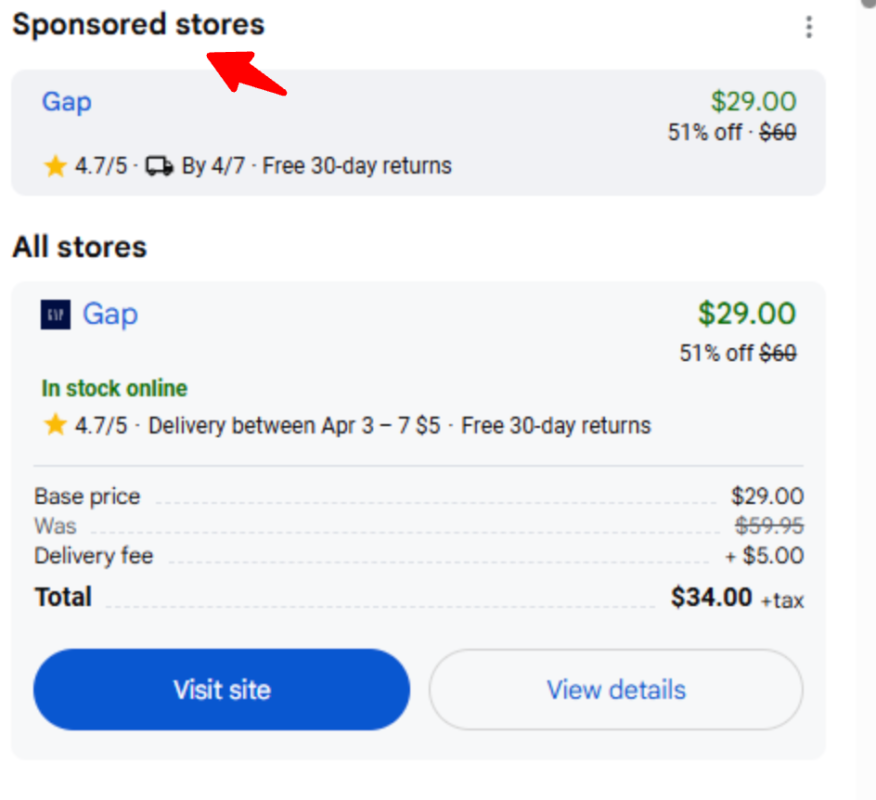
Google has begun placing sponsored ads directly within free listing surfaces, a significant shift from the previous setup where ads and organic results occupied separate spaces.
What changed
Ads are now appearing inside three surfaces that were previously free-listing-friendly: AI Mode product grids, web search product grids, and the Shopping tab. The testing started in March 2025 in AI Mode and has since rolled out more broadly.
Web search product grids are the most impactful surface, as they drive significant ecommerce traffic and revenue.
Inserting ads there pushes organic/free listings further down.
In the Shopping tab, up to 4 ad slots can now appear, partially reversing the 2020 shift that had prioritised free listings over ads.
In most cases, the sponsored ads appear to mirror the first organic free listing result, meaning brands not running Shopping ads risk losing visibility to a paid duplicate of their own (or a competitor’s) organic result.
Free listings remain worth fighting for; they’re getting more prominent in search overall, not less.
But the margin for error is shrinking: running Shopping ads alongside a strong free listings strategy is now effectively mandatory to stay competitive, not just a nice-to-have.
As SEO changes your communication from rank to eligibility
If before the question was “Do we rank well?”, now the question is “Are we even eligible to be chosen?”
You must educate your clients.
Many SEOs still think the goal is to show the classic organic traffic increase percentage, but in many cases, that’s the wrong “metric”.
For example, if you’re creating categories and subcategories, you’ll likely see more traffic, but only for a certain period.
For an ecommerce that has already covered the basics, you typically do a review of past work and make a few refinements.
What does that mean? Often, you end up reducing traffic because, in many cases, you don’t need more traffic; you need better traffic.
Changing your mindset is necessary.
Now you can have a traffic drop while your sales from organic keep growing, that’s not a bad signal, because the client is making money.
You need to position this correctly.
SEO is becoming a connecting function that helps leadership identify where gaps in systems or data could prevent the brand from being selected.
Set honest expectations around measurement.
Some impact will show up as direct traffic, and some will not be visible at all.
What do you know about your product pages?
Identify the exact moments in the conversation where your product becomes the answer.
If your data can’t address “Will this fit?” or “Is this easy to use?”, you won’t make it into the final recommendation.
People search for products that slot naturally into their lifestyle. Surface and emphasize the features that make yours the obvious match.
I show you an example.
The coffee maker is a good example to show because buyers have very specific anxieties: “Will it make proper espresso?” (no), “How long does it stay warm?” (2 hours, then flavour drops), “Does it fit under my cabinet?” (you need 40 cm clearance).
The traditional version answers none of those.
The constraint version pre-empts the three most common return reasons: wrong grind type, cold coffee after 30 minutes, and doesn’t fit the shelf before the buyer even has to ask.
BrewMaster 600 Drip Coffee Maker
- 12-cup capacity carafe
- Programmable 24-hour timer
- Built-in grinder with 5 coarseness settings
- Thermal keep-warm plate
- Pause & pour function
- Removable water tank for easy filling
BrewMaster 600 Drip Coffee Maker
Provide vertical-specific product guidance
Analysing Google Search Console data and external sources, we identified significant search volume around sofa sizes for this client.
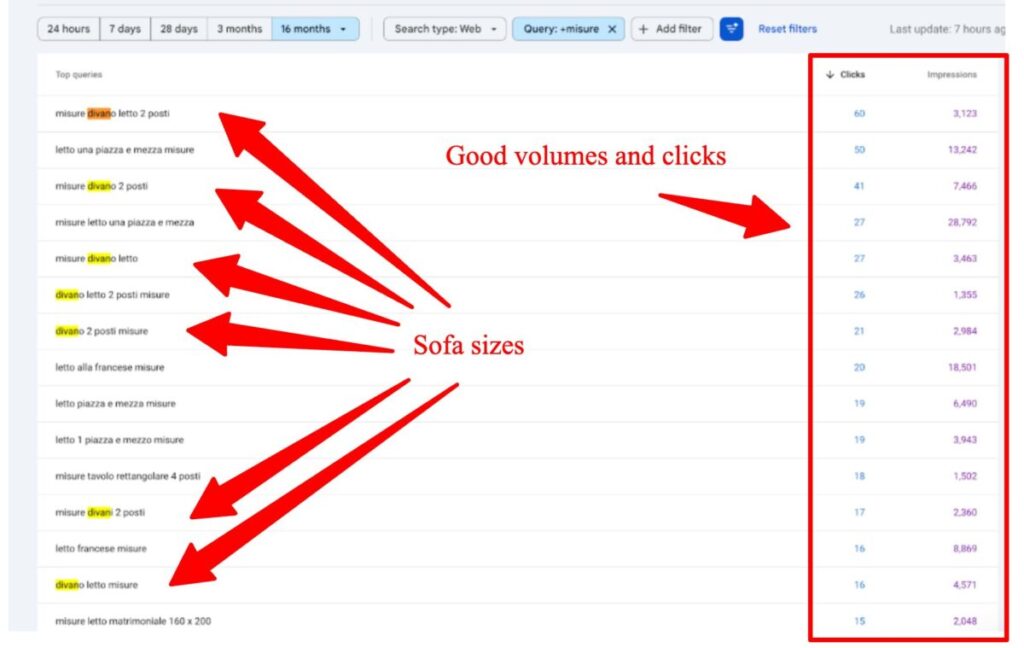
To cover this topic comprehensively, we consolidated different keywords into one article: “Choosing the Ideal Sofa: A Guide to 2, 3, 4 and 5-Seater Sizes”.
This guide will be strategic; placing it on the specific product page will help it perform better for both AI and users, improving your product page visibility.
Context is king
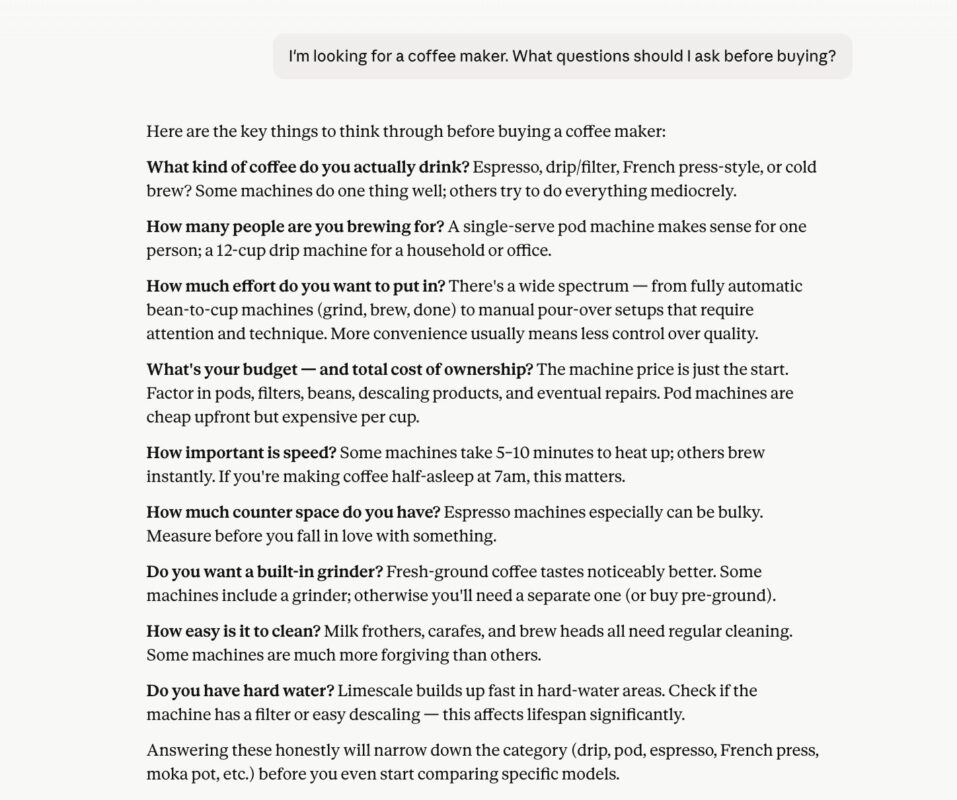
If you search in Claude: “I’m looking for a coffee maker. What questions should I ask before buying?”, it will give you a series of useful questions.
This is very helpful for building out your product pages properly.
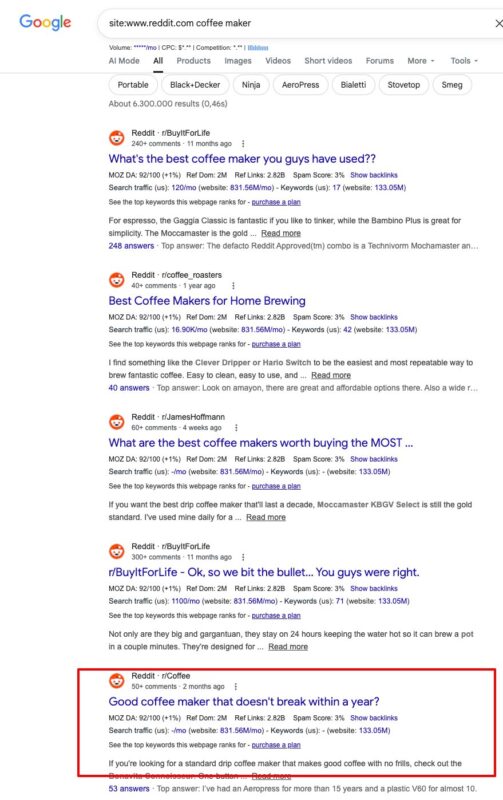
You can also search for real conversations on Reddit.
For example, there is a conversation about “Good coffee maker that doesn’t break within a year?”.
If your product page covers this aspect, you’ll have a better chance of achieving results.
Another aspect is your schema markup.
There are better ways to provide context, like using advanced schema markup.
For example, the product type’s “UsageInfo” or “Audience” fields.
Product feed optimization essential checklist
As I’ve discussed many times, having a clean product feed is very important.
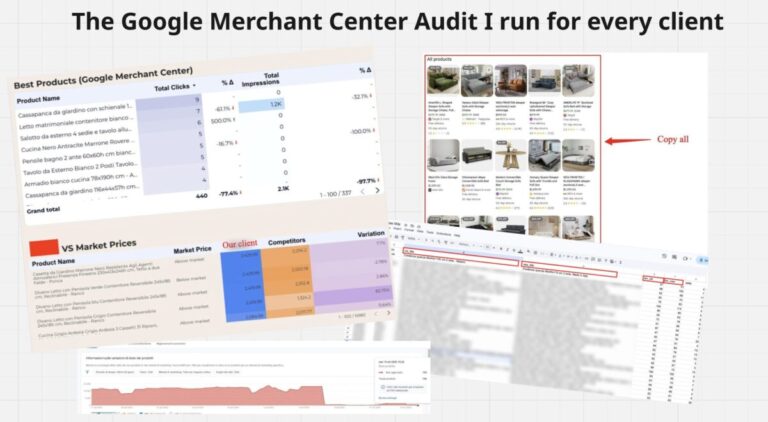
We audited 10,000 products across a Google Merchant Center feed.
We documented everything: the audit process, the fixes, and how we use the dashboard to keep it clean.
Bonus: You’ll also find a product health checklist.
What to monitor in GMC
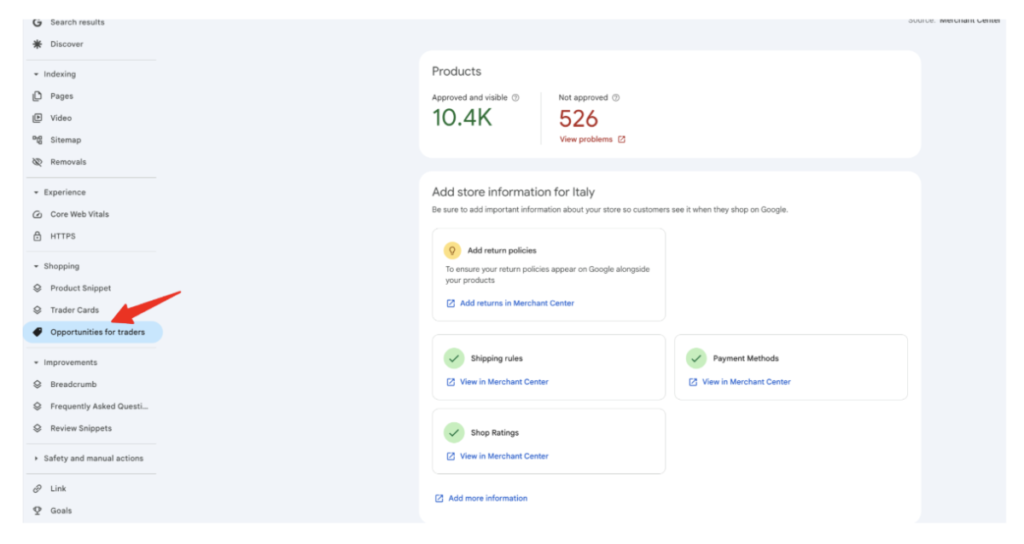
- Product feed diagnostics
Check disapproved products daily and address the root cause, not just the symptom. Flag missing required attributes and resolve data quality warnings before they compound.
- Performance insights
Track click-through rates on product listings, monitor impressions across Shopping and organic surfaces, and keep conversion tracking clean across every channel.
- Issue alerts
Watch for broken feeds, crawl errors, and price or availability mismatches between your site and your feed — these silently kill visibility. Set up automatic alerts so nothing slips through.
- Policy compliance
Review policy violations proactively. A single unresolved violation can suppress an entire product category.
- Ongoing actions
Run regular audits of product data completeness. As Google rolls out conversational commerce metrics, make sure you have a baseline ready to measure against from day one.
How to build PDPs for AI search with decision support
Here is a representation of how a product page should be.
Obviously, each sector has its own differentiation in terms of communication and marketing, so you can adapt.
But this type of product page structure is strong and works very well in many cases.
<link rel="canonical" href="https://sofamilano.com/sofas/comfort-pro-3-seater" />
Primary product angle
Sofà Milano Comfort Pro 3-Seater, Handcrafted Italian Sofa, Stain-Resistant Fabric, Solid Beech Frame, 10-Year Warranty H1
Handcrafted in Milan with 40 years of artisanal expertise · 5,260 five-star reviews
Premium HR40 foam cushions for superior lumbar support. 12 colour options, 3 configurations. Free white-glove delivery & installation included.
Sofà Milano Comfort Pro 3-Seater, Handcrafted Italian Sofa, Stain-Resistant Fabric, Solid Beech Frame, 10-Year Warranty H2
Crafted in our Milan workshop with over 40 years of artisanal expertise, the Comfort Pro 3-Seater is a premium Italian sofa built to redefine home living. Each piece is upholstered by hand using premium-grade, stain-resistant fabric — designed to age beautifully and support your family through every moment.
The solid FSC-certified beech wood frame is built to last a lifetime, while the high-density HR40 foam cushioning provides optimal lumbar support. Available as a fabric sofa in 12 colours and 3 configurations — standard, corner, and chaise.
- Handcrafted 3-seater sofa — 40+ years expertise
- Premium stain-resistant upholstery fabric
- FSC-certified solid beech wood frame
- High-density HR40 foam cushions
- 12 colour options — custom order available
- Tool-free 20-minute assembly
- 10-year structural warranty included
- Free white-glove delivery & installation
Choose the perfect sofa by budget — from compact entry-level to bespoke Italian luxury.
Answer 3 quick questions and we’ll find your perfect Sofà Milano sofa.
Today
Day 1
Days 2–4
Day 5
InstallDays 6–7
Our top-selling sofas — discover what customers love most.
SERP too competitive? Here’s an underrated tactic 👇
If someone has never engaged with your category before, Google’s AI may simply not surface your brand.
AI won’t consider you relevant unless it already has signals that you are.
For a keyword like “football shoes”, an extremely competitive term, your brand probably won’t appear in 99% of cases because major brands already dominate the space.
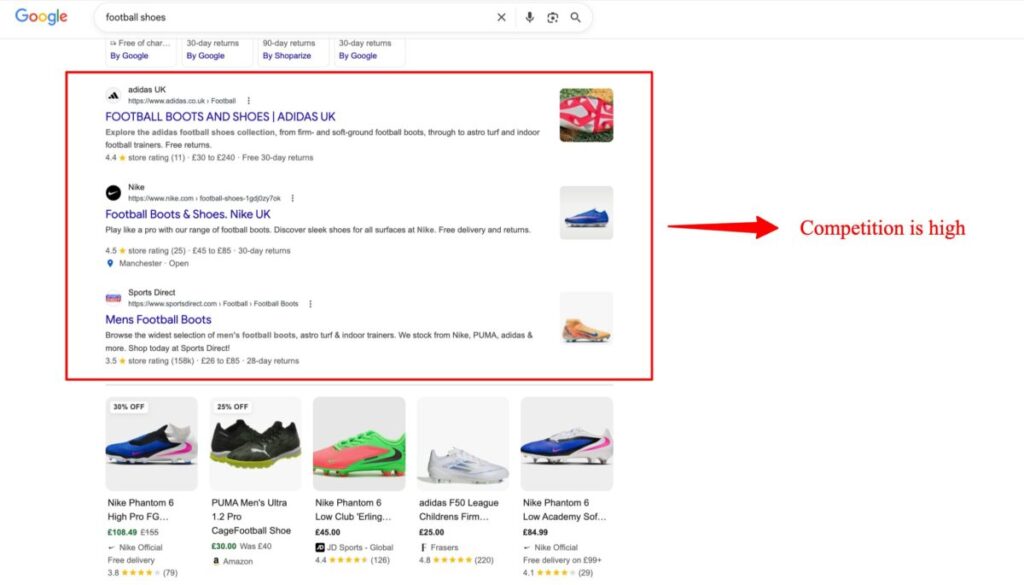
You might be invisible not because your SEO is weak, but because you haven’t earned a place in the user’s behavioural history yet.
What to do:
- Build discovery outside Google first. TikTok, Instagram, Reddit presence, and UGC seeding on Pinterest and YouTube Shorts can create the early signals that eventually feed back into personalised search.
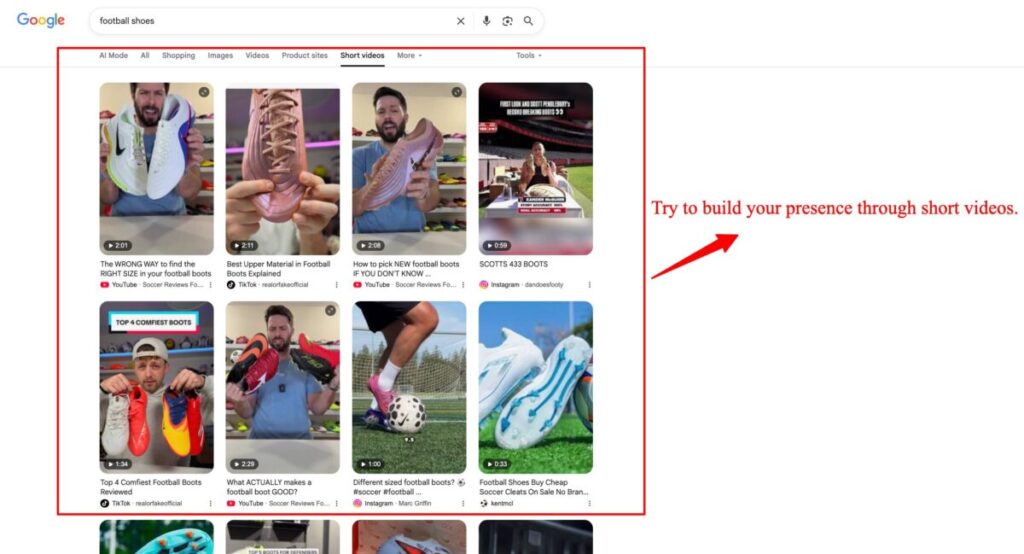
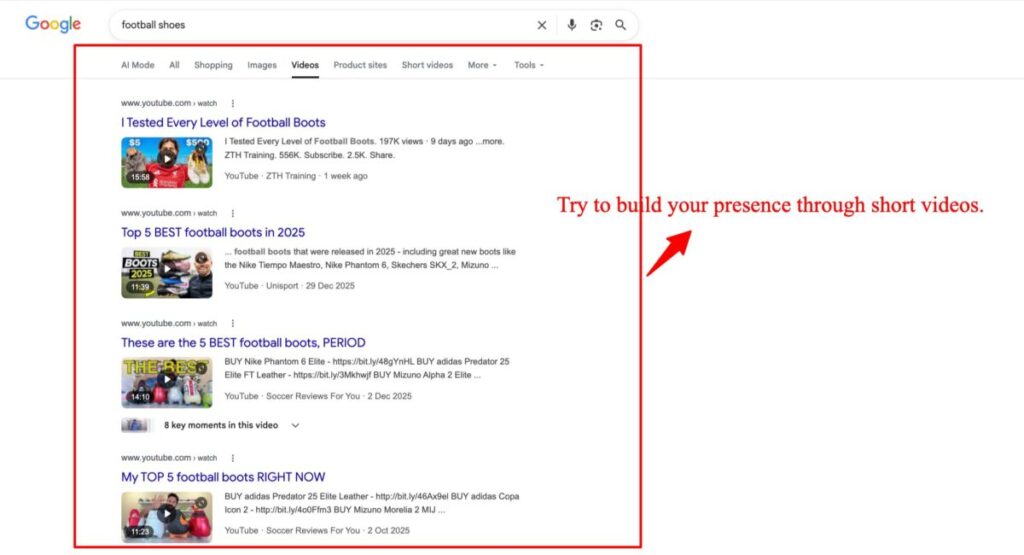
- Borrow visibility before you earn it. Partner with influencers who already live inside your target audience's circle. You're not just reaching their followers, you're pulling your brand into the filter circle that Google is watching.
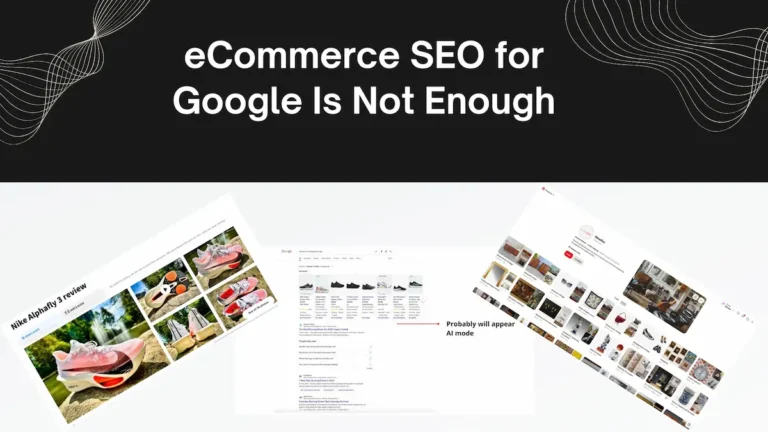
I worked with this marketplace, Nowarc.com, and we discovered that Pinterest was a goldmine.
We implemented a solid SEO strategy, and Pinterest gave us very good results (Conversion Rate) for our eCommerce.
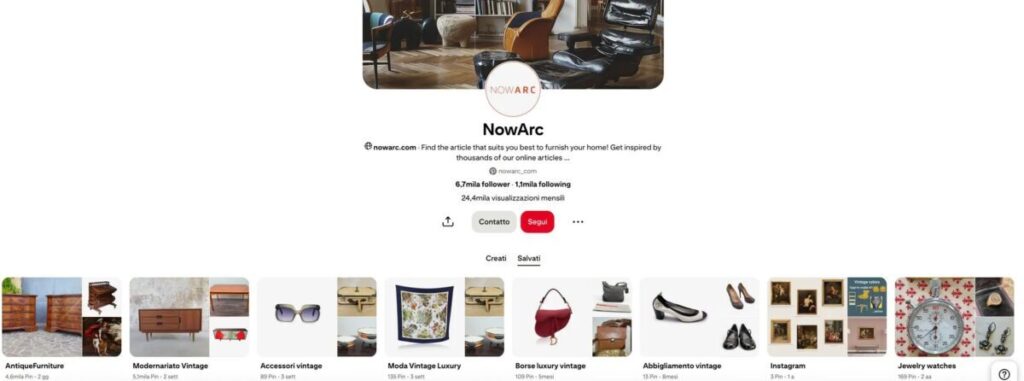
This is a great example of how you can gain an advantage with relatively low effort and without spending a huge budget.
The brands that win Search will own Daily Habits
Search is becoming increasingly contextual.
Google is starting to understand why people search, not just what they type.
Someone searching for “coffee maker” might actually be:
- setting up a home office
- improving their morning routine
- moving into a new apartment
- creating a cosy kitchen setup
- trying to replace expensive café habits
The product is only part of the story.
Tactical suggestion:
Build content and categories around routines, behaviours, and life moments.
Instead of only targeting:
- “espresso machine”
- “bean to cup coffee maker”
Create pages like:
- Coffee setups for home offices
- Morning routine essentials
- Small kitchen coffee stations
- Coffee makers for busy parents
- Beginner espresso setups for apartments
You’re aligning your products with intent, lifestyle, and identity.
Case study
We worked on an eCommerce strategy focused on coffee machines and realised that users weren’t simply searching for appliances.
They were searching for routines.
So instead of building only traditional category pages, we created content clusters tied to real-life situations:
- work-from-home coffee setups
- café-style mornings at home
- compact coffee corners for small apartments
- productivity-focused desk coffee stations
- ...
We also combined this with Pinterest-driven visual discovery and short-form content showing aesthetic coffee setups and morning rituals.
This helped Google associate the brand with broader lifestyle intent rather than just transactional keywords.
The result: Higher engagement, stronger semantic relevance, and visibility across informational and commercial searches that competitors weren’t targeting.
Don’t think only about SEO
If you're only thinking about rankings, categories, and products on Google, you're already behind.
In the example below, you can see that Google can now index everything: short videos, forum discussions, videos, and more.
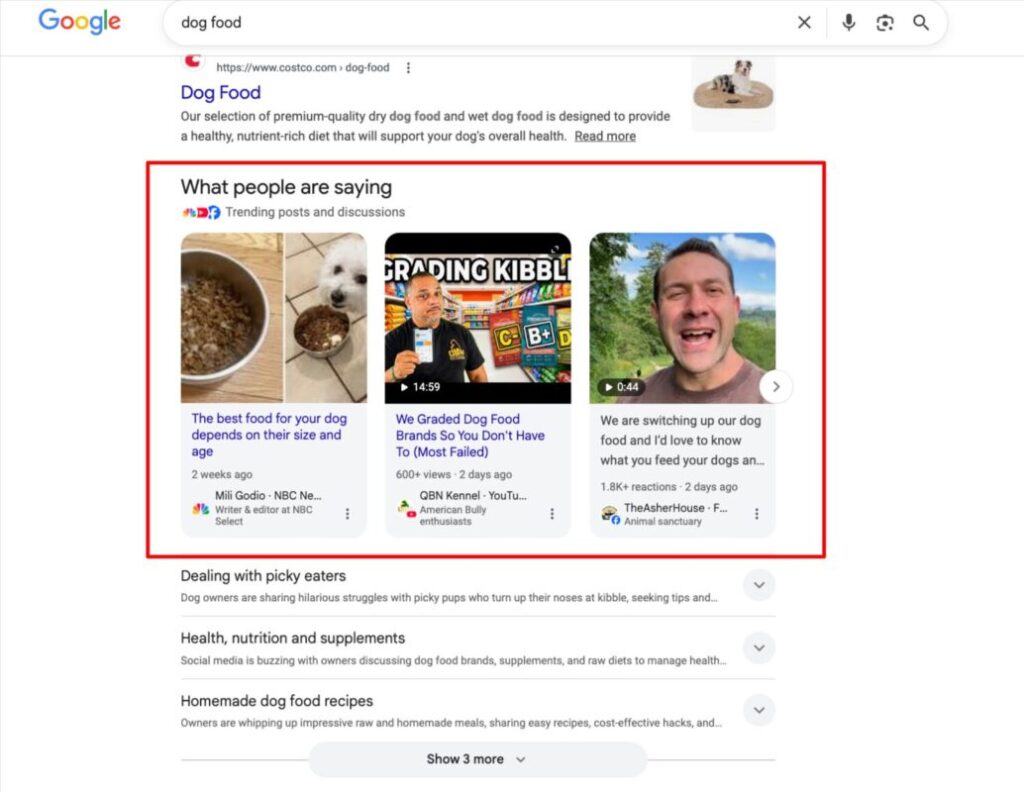
This is good news because it gives you more opportunities to be creative with your strategy.
You can attack different social channels and content formats to reach and acquire clients.
Build a solid brand. That’s what really matters.
At the end of the day, as I’ve mentioned in many of my posts and articles, investing in a strong link-building and Digital PR campaign is essential.
Many brands appear in AI results or Google Shopping simply because they have a strong brand presence.
They can even have poor technical SEO, yet they still appear and gain visibility.
Beyond that, investing in technical SEO is still relevant. Get the basics right.
If you want to grow your eCommerce SEO seriously with an SEO partner like me, contact me at simoneparodi@searchind.com.